
SIDDHI TRANSMISSION
GST : 24AFAFS7239C1Z7

Call us now
07971258279
GST : 24AFAFS7239C1Z7
Call us now
07971258279
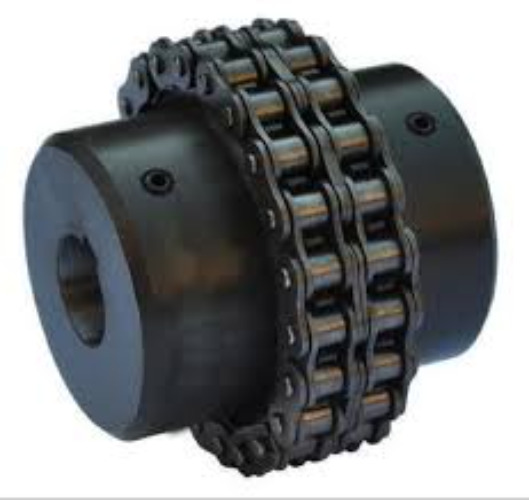
An industrial chain coupler is a mechanical component used to connect two shafts or components in industrial machinery, typically involving a chain-driven system. It is designed to transmit power or torque between shafts while allowing some flexibility in alignment, movement, and shock absorption. Here's a detailed description:
Industrial Chain Coupler Description
Purpose
Industrial chain couplers are used to link two rotating shafts, enabling the transfer of rotary motion or torque in industrial machines, conveyors, or other mechanical systems that use chains for power transmission.
Construction and Design
* Material Typically made from high-strength steel, alloy steel, or other durable materials to withstand heavy loads and harsh industrial environments.
* Components The coupler typically consists of two hubs (or flanges) that are attached to the shafts, and a chain element that connects the hubs. It may also include bushings or bearings for smoother operation and less friction.
* Design Variations There are different types of industrial chain couplers, including roller chain couplers, block chain couplers, and others, depending on the application requirements.
Functionality
* Torque Transmission The primary function of a chain coupler is to transmit torque between two shafts in a reliable and efficient manner.
* Shock Absorption Chain couplers can absorb shock loads and vibrations that might damage the machinery, as they allow for some flexibility in the connection.
* Misalignment Tolerance One of the key advantages of chain couplers is their ability to tolerate slight misalignment between the shafts. This makes them suitable for systems where perfect alignment might be challenging.
Applications
* Conveyors Used in conveyor systems for material handling, where the coupler connects the motor shaft to the drive shaft of the conveyor.
* Pumps and Compressors In applications where pumps or compressors need to be connected to motors or other drive systems.
* Heavy Machinery Often used in industrial machinery like crushers, mills, or any equipment with rotating shafts.
* Automated Systems Found in various automated systems that require a power transfer between components or sections.
Advantages
* Durability Built to handle high loads and harsh conditions.
* Cost-Effective Often less expensive than other types of couplers or coupling systems.
* Ease of Maintenance Chain couplers are relatively easy to maintain and replace as they have fewer complex components.
* Flexibility in Application Can accommodate some degree of misalignment, making them versatile in various settings.
Common Types of Industrial Chain Couplers
1. Roller Chain Coupler Uses a standard roller chain to connect two shafts.
2. Block Chain Coupler Utilizes a block-style chain for heavy-duty applications.
3. Flexible Chain Coupler Designed for applications requiring more flexibility and movement between shafts.
Would you like further details on a specific type of industrial chain coupler or its applications in a particular industry?

Price:
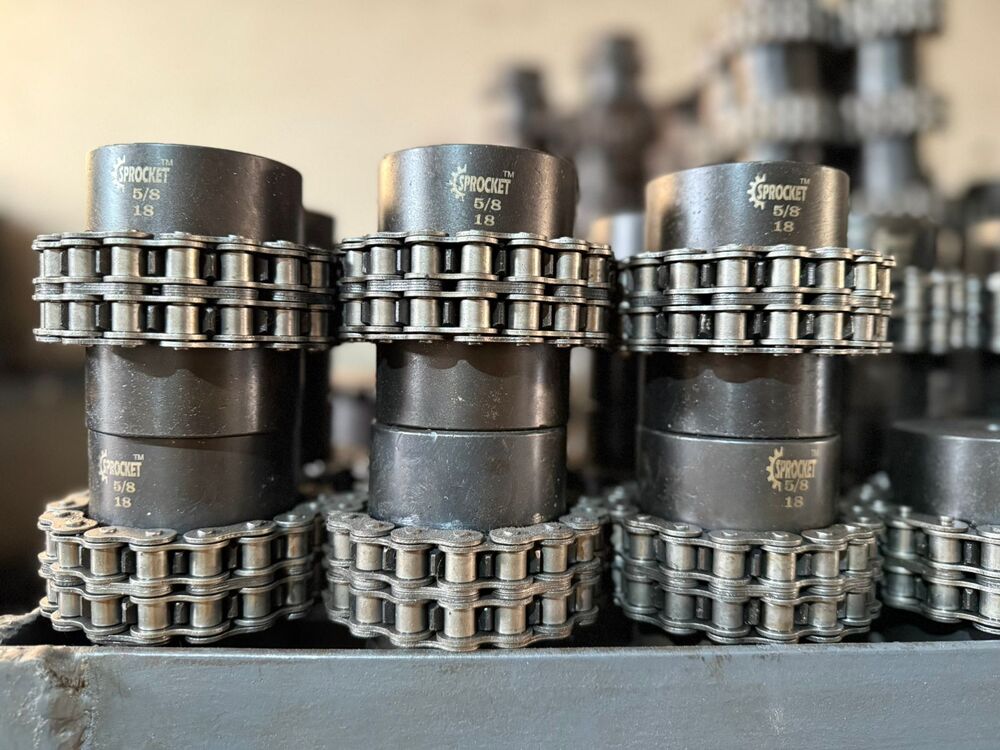
Price 800 INR / Piece
Minimum Order Quantity : 50 Pieces
Application : Transmission and Distribution of Power
Standard : IS/ANSI Standard
Outer Diameter : 50 mm to 210 mm
Shape : Round
GST : 24AFAFS7239C1Z7



 Send Inquiry


 Send Inquiry